
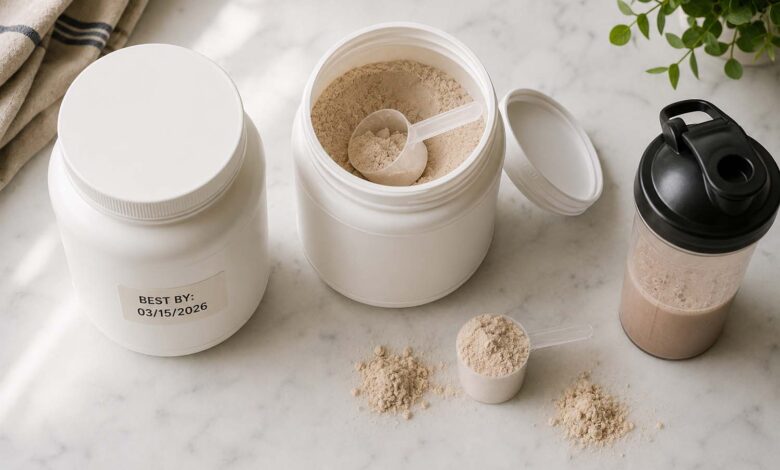
You found a tub of protein powder in the back of your cabinet with a best-by date from eight months ago. It looks fine, smells fine, and has no visible clumping or mold. You also have an open tub you have been using for about five months. Is either one still good?
Does protein powder go bad?
The short answer: Yes, protein powder goes bad, but the timeline is longer than most people expect and the printed date is almost always a quality indicator, not a safety expiration. Unopened protein powder is typically good for 1 to 2 years. Once opened, use within 3 to 6 months for best quality. The biggest risk is not the date on the label but moisture, heat, and a dirty scoop introducing bacteria into the container. Mixed protein shakes must be refrigerated and consumed within 24 hours.
For more on food storage and pantry staples, see the Food Storage Guide.
Key Takeaways
- Unopened protein powder: 1 to 2 years typical shelf life
- Opened protein powder: 3 to 6 months for best quality
- Printed date is a best-by quality indicator, not a safety expiration
- Moisture is the primary enemy. Never store in a bathroom or humid environment
- A dirty scoop introduces bacteria and shortens shelf life significantly
- Mixed protein shakes: refrigerate immediately and consume within 24 hours
- Protein powder does not need refrigeration before mixing
The Printed Date Is Not a Safety Expiration
This is the most important thing to understand about protein powder shelf life. Protein powder is a dry supplement product regulated by the FDA as a dietary supplement. The date printed on the container is almost always a “best by” or “best if used by” date that reflects when the manufacturer expects quality to begin declining, not when the product becomes unsafe.
The FDA explains that best-by dates on food and supplement products relate to quality rather than food safety, as long as the product shows no signs of spoilage. Protein powder, being a very dry product with low water activity, does not support the kind of rapid bacterial growth that makes perishable foods dangerous past their dates. A tub of whey that is a few months past its best-by date is very likely still safe to use if it has been stored properly and shows no signs of spoilage. The key questions are: does it smell normal, look normal, and mix without unusual clumping? If yes, it is probably fine.
That said, quality does decline with age. The proteins undergo a process called the Maillard reaction over time. Proteins and sugars react in the presence of oxygen, producing brown compounds and reducing the biological availability of the protein. A tub that is a year past its date may be safe but will be less effective and taste worse than fresh powder.
Shelf Life by Protein Powder Type
Not all protein powders age the same way. The type of protein, the additives, and the processing method all affect how long a product stays at peak quality.
| Type | Unopened Shelf Life | Opened Quality Window | Key Storage Note |
|---|---|---|---|
| Whey concentrate | 12 to 19 months (research); up to 2 years (labeled) | 3 to 6 months | Most temperature-sensitive; keep cool and dry |
| Whey isolate | 8 to 15 months (research); up to 2 years (labeled) | 3 to 6 months | Research window shorter than concentrate; more stable after mixing due to lower fat and lactose |
| Whey hydrolysate | 12 to 18 months | 3 to 6 months | Pre-digested structure may reduce shelf life; check label date carefully |
| Casein | 12 to 18 months | 3 to 6 months | Slightly more stable than whey due to micellar structure |
| Plant-based (pea, rice, soy) | 18 to 24 months | 3 to 6 months | Added oils, greens, or probiotics shorten shelf life significantly |
| Collagen peptides | Up to 2 years | 3 to 6 months | Among the most shelf-stable types; no dairy fat or lactose degradation pathway |
| Egg white protein | 12 to 18 months | 3 to 6 months | Slightly less shelf-stable than whey or casein |
| Meal replacement powders | 12 to 18 months | 1 to 3 months | Added fats, carbs, and vitamins degrade faster than protein alone |
How to Tell If Protein Powder Has Gone Bad
Unlike perishable foods, protein powder gives clear sensory signals when it has genuinely turned. The challenge is distinguishing actual spoilage from normal quality decline.
Signs of Spoilage: Discard If You Notice These
- Rancid or sour smell: Fresh protein powder smells neutral to mildly sweet or flavored. A sharp, rancid, sour, or distinctly “off” smell means the fats or proteins have oxidized. Discard it.
- Bitter taste: Protein powder that tastes significantly more bitter than when it was new has likely undergone Maillard browning and protein oxidation. Still probably safe but significantly degraded.
- Wet or hard clumps that do not break up: Some powders develop small dry clumps from normal settling, which is fine and breaks up when shaken. Wet, dense, or hard clumps that do not dissolve indicate moisture contamination. Discard immediately: moisture enables bacterial and mold growth.
- Mold: Any visible fuzzy growth of any color means discard the entire container without exception.
- Significant color change: A noticeably darker, yellower, or grayish color compared to when the tub was new indicates advanced Maillard browning. The powder is degraded and significantly less nutritious even if technically safe.
- Insect activity: Any evidence of pantry pests in the container means discard immediately.
Normal vs. Spoiled: What Is Actually Fine
- Small dry clumps: Normal settling from storage. Shake the container to break them up. If they dissolve when mixed, no problem.
- Slightly different taste from a new tub: Flavor degrades over time. Older powder tastes less fresh. This is quality decline, not spoilage.
- A few months past the best-by date with no other signs: Very likely still safe for a healthy adult if stored correctly and passing sensory checks.
The Four Things That Actually Make Protein Powder Go Bad
Understanding what causes protein powder to spoil is more useful than memorizing dates. The date on the label assumes ideal storage conditions. Deviate from them and the powder degrades faster regardless of the date.
What Shortens Protein Powder Shelf Life
- Moisture: The primary enemy. Even small amounts of moisture introduced through a wet scoop, humid storage environment, or leaving the lid off trigger clumping and create conditions for bacterial and mold growth. Never store protein powder in a bathroom, near a dishwasher, or in a humid basement. Never use a wet spoon or scoop.
- Heat: Research published in the Journal of Dairy Science found that whey protein stored at 95 degrees Fahrenheit lasted only 9 months versus 18 months at 70 degrees Fahrenheit. A hot car, a shelf above the stove, or a warm garage significantly accelerates degradation.
- Oxygen: Exposure to air triggers protein oxidation and fat rancidity. Seal the container tightly after every use. If you buy large bags, consider transferring to an airtight container.
- A dirty scoop: A scoop that has touched your mouth, a wet surface, or another food introduces bacteria and moisture directly into the container. Always use a dry, clean scoop and do not double-dip.
Does Protein Powder Need to Be Refrigerated?
No. Dry protein powder does not need or benefit from refrigeration. In fact, storing protein powder in the refrigerator can introduce condensation when the container is removed and opened in a warmer room, which introduces the moisture that is its primary enemy. Store dry protein powder in a cool, dry pantry or cabinet away from heat, sunlight, and humidity. Room temperature between 65 and 75 degrees Fahrenheit is ideal.
The exception is once the powder has been mixed into a liquid. A prepared protein shake must be refrigerated immediately and consumed within 24 hours. Mixed protein drinks are perishable and follow the same rules as any other dairy or plant-based beverage. Do not leave a prepared shake at room temperature for more than 2 hours.
See also

Is It Safe to Use Protein Powder Past the Expiration Date?
For healthy adults, using protein powder a few months past its best-by date is likely safe if it passes sensory checks and shows no signs of spoilage. Research from BarBend and Healthline confirms that the printed expiration date reflects quality decline, not a safety cliff. Some studies have found dairy-based products to still be microbiologically safe up to 6 months past their best-by dates.
The important distinction: past the date, the protein content may be somewhat reduced due to Maillard browning and protein oxidation. If you are using protein powder specifically to hit a protein target, an older tub is working less efficiently than a fresh one even if it is technically safe. For most casual users the difference is not meaningful. For competitive athletes or people with specific protein targets, using fresh powder within the quality window matters more.
Recipes and Uses for Protein Powder
If you have protein powder approaching the end of its quality window, use it up in a cooked application where the degraded flavor is less noticeable. Protein powder works well blended into a banana bread recipe or mixed into a mixed berry smoothie. For a high-protein baked option, stir it into pancake batter. For more on lean protein sources and how protein powder fits into a balanced diet, see best sources of lean protein.
Does Protein Powder Go Bad FAQ
FAQ: Can Expired Protein Powder Make You Sick?
Protein powder that is simply past its best-by date but shows no signs of actual spoilage is very unlikely to make a healthy adult sick. The Maillard browning and protein oxidation that occur with age reduce quality and effectiveness, not safety in most cases. The real risk comes from spoilage caused by moisture contamination, which can introduce mold or bacteria. If you see mold, smell something rancid, or find wet clumps, discard it. Do not use protein powder that has been improperly stored or shows any of the spoilage signs listed above regardless of the date.
FAQ: Does Plant-Based Protein Powder Last Longer Than Whey?
Generally yes for plain plant proteins. Pea, rice, and soy protein are not subject to the same dairy-specific degradation pathways as whey and casein, giving them a slightly longer shelf life of 18 to 24 months. However, plant-based protein powders that include added oils, greens powders, seeds, probiotics, or other functional ingredients have shorter shelf lives because those additives degrade faster than the protein itself. A plain pea protein powder will outlast a whey concentrate. A plant-based meal replacement with greens and probiotics may have a shorter window than either.
FAQ: How Long Does Protein Powder Last After Opening?
3 to 6 months for best quality across all major protein powder types. This assumes proper storage: sealed tightly after every use, kept in a cool dry place, and always scooped with a dry utensil. The 3 to 6 month window is a quality guideline. Properly stored powder may remain safe beyond this window but will taste increasingly stale and deliver progressively less protein per serving due to degradation.
FAQ: Should Protein Powder Be Stored in the Fridge?
No. Dry protein powder should not be stored in the refrigerator. The cool temperature offers no benefit and the humidity from repeated opening in a temperature-differential environment introduces moisture, which is the primary cause of clumping and microbial growth in protein powder. Store in a cool, dry pantry between 65 and 75 degrees Fahrenheit. Once mixed into a liquid, refrigerate immediately and consume within 24 hours.
Further Reading
Better Living may earn commissions through affiliate links and may occasionally feature sponsored or partner content. If you make a purchase through our links, we may receive a small commission at no cost to you.