
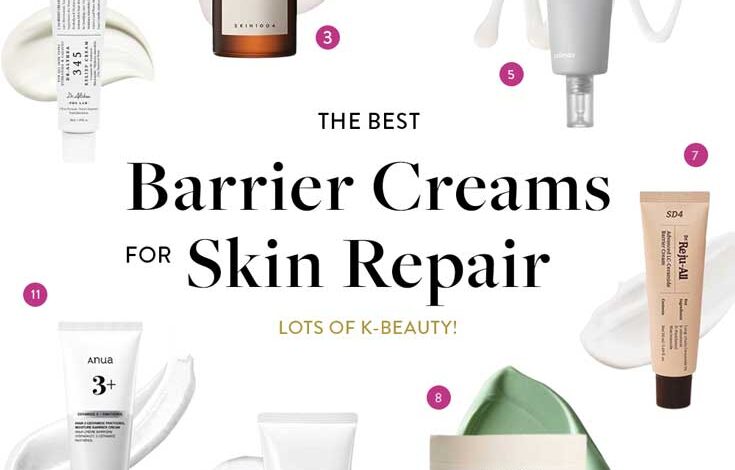

Barrier Creams
Lately, I’ve been dealing with a severely compromised skin barrier.
It actually took me a while to realize that’s what was happening.
I’ve always had dry skin and it’s been an especially cold NYC winter this year so at first I didn’t think too much of how tight and cracked my skin was feeling.
I should have realized when a derm in Korea refused to do potenza on me.
I went for a quick trip to Seoul (specifically to do some beauty treatments) and in that very polite, customer-service oriented way, the doctor said gently,
“Ahh, I think your skin is a little dry right now? So we can just to regular micro needling.”
ADVERTISEMENT
I should have known then that she meant –
lady, your skin is dry AF and if I attempt RF micro needling the heat will feel like it’s burning your dermis from the inside out.
In fact, I was so dense that a week later I went to a different clinic in Korea (for my hyperpigementation lasers).
And a second doctor essentially said the same thing – your skin is in terrible condition.
Well, she didn’t actually say that.
She’s my no-nonsense derm but rather than waste time no words, she just paused midway through the treatment and said,
“hmm I’m going to add on another laser to help you out.”
ADVERTISEMENT
Some people might panic at the thought of a change mid way through treatment, but I trust this doc a lot.
She’s transformed my skin SO much so I just nodded and let her do her thing.
Afterwards, she explained a bit more about the third laser and how it should help my (crater sized) pores.
She didn’t charge me for it either!
Man I love the service and efficacy of Korean skin clinics.
ADVERTISEMENT
Anyway, I still didn’t realize my skin was doing terrible because after the laser and micro needling, my skin looked amazing.
Bright, blemish free and poreless…
So I continued not moisturizing all winter long and even started doing daily red light therapy and hydroquinoine.
I bought this larger, heavier duty red light after seeing phenomenal improvement in my hyperpigmentation with a cheapie Amazon red light mask.
And I’ve been using this brand of hydroquinone.
It’s OTC in Asia, unlike in the US. If you don’t have plans to travel you can pick up a bottle on Ebay.
Anyway, it finally hit me ~3 months later when my skin just… hurt.
ADVERTISEMENT
I finally put it all together. And felt kind of silly honestly.
I spent a couple weeks eliminating all my actives, stopping the red light and just focusing on healing my poor skin barrier.
Here are the barrier creams I’ve tried, with my notes on each.
ADVERTISEMENT
Best Barrier Creams for Skin Repair
Here’s my ranking if you just want the short and sweet list.
| Rank | Product | Barrier Repair Focus | Texture | Best For | Check Price |
| 1 | Dr. Reju-All Ceramide Cream | Lipid Rebuilding | Lightweight cream | Dry, sensitive skin | Amazon, YesStyle |
| 2 | Aestura Ato Barrier Cream | Lipid Rebuilding | Rich cream | Dry, sensitive, eczema-prone skin | Amazon, YesStyle |
| 3 | SKIN1004 Probio-Cica Ampoule | Soothing + Repair | Milky ampoule | Sensitive, reactive, post-active skin | Amazon, YesStyle |
| 4 | Illiyoon Ceramide Cream | Lipid Rebuilding | Thick cream | Dry, very dry, all ages incl. babies | Amazon, YesStyle |
| 5 | La Roche-Posay Cicaplast Baume | Soothing + Sealing | Thick balm | damaged, irritated skin | Amazon, YesStyle |
| 6 | BeautyBio Skin Recovery Cream | Lipid Recovery + Renewal | Rich cream | normal skin | Amazon, Ulta, Sephora |
| 7 | Abib Rice Probiotics Overnight Mask | Overnight Sealing | Bouncy jelly | brightening + overnight hydration | Amazon, YesStyle |
| 8 | Sonsie Skin Adapt Cream | Peptide + Repair | Lightweight cream | Sensitive, redness-prone skin | Sonsie Skin |
This is purely in the context of skin barrier repair when your skin is compromised.
I have more in-depth reviews on each product below!
ADVERTISEMENT
Key Ingredients to Look for in a Barrier Cream
Ceramides
Ideally long-chain or clearly labeled types like Ceramide NP, AP, EOP. Look for them in the top half of the ingredient list.
The type matters – ceramide NP is one of the most studied and widely effective.
Fatty Acids and Cholesterol
Ceramides work best in the presence of both of these.
The stratum corneum’s lipid matrix is a three-way partnership. Products that only add ceramides without fatty acids and cholesterol miss the full picture.
ADVERTISEMENT
Humectants
Like glycerin, hyaluronic acid, panthenol (provitamin B5), and sodium PCA.
These draw water into the skin and keep it there.
Panthenol holds and binds to water, keeping essential moisture locked into your skin, and also promotes wound healing.
Emollients
Like squalane, shea butter, or plant seed oils (meadowfoam, macadamia).
These smooth the surface and reinforce the lipid layer without clogging pores.
Niacinamide
Does double duty: improves barrier function while also brightening uneven tone and hydrating.
But one caveat – because niacinamide is so powerful, skincare brands are adding it to everything these days.
Too much of it can cause irritation so if your skin barrier is really compromised, you might want to double check your products to make sure you’re not accidentally using too much.
ADVERTISEMENT
Occlusives
Like dimethicone or petrolatum.
These form a physical seal over the skin, dramatically reducing TEWL. These are especially important for very compromised or dry skin.
Beta-sitosterol and madecassoside
Like a phytosterol or centella asiatica.
These are calming, anti-inflammatory additions that help manage redness and sensitivity alongside barrier repair.
Allantoin
A gentle wound-healing agent that soothes irritation and promotes cell turnover.
ADVERTISEMENT
How to Heal a Damaged Skin Barrier
To really heal a compromised skin barrier fast, you want a layered approach:
humectants pulling in water → ceramides and lipids rebuilding the structural matrix → occlusives sealing it all in
It’s hard to get everything in one product, so this might mean layering a serum plus a moisturizer and then a final heavier barrier cream.
If I had to narrow it down to a simple routine, I’d go with this:
ADVERTISEMENT
Barrier Cream Product Reviews
One thing I learned through the process is that not all barrier creams work the same way.
Some are rebuilding your skin’s lipid structure from the ground up, others are primarily soothing an angry, reactive barrier, and a few take a completely different approach altogether.
So I’ve grouped the reviews below to reflect those differences:
ADVERTISEMENT
Core Barrier Rebuilders
Ranking: 10/10
Available on: Amazon and YesStyle

Dr Rejua-All is pretty famous in Korea.
It’s a pharmacy skincare brand known for being ‘the most sold pharmacy brand cream’.
It comes in 2 formulations:
- a PDRN cream
- a ceramide cream
I’m not sure which option is the most sold one but my guess is it’s the PDRN version.
I went for the simpler ceramide cream just to keep the ingredients simple.
I wasn’t quite sure if I should be putting PDRN on a severely compromised skin barrier. Plus, ceramides are key to improving skin hydration.
Ceramides are already in your skin. They’re lipid molecules that make up ~50% of your skin’s outermost layer.
Usually when your barrier is compromised, your ceramides have broken and thats why moisture is escaping and irritants are getting in.
This cream’s claim to fame is its focus on ‘long chain ceramides’. It has lots of bold marketing claims like
- 22% more effective moisture delivery
- 19% stronger skin barrier recovery
- 9% more similar structure to your skin’s natural makeup
I looked into it and bought this cream because the science seems to back up Dr Reju-All’s claims.
ADVERTISEMENT
The literature shows that long chain ceramides outperform short-chain ones by creating ordered lipid ‘layers’ that result in a higher-packed, denser skin barrier.
Short chain ceramides actually enhance permeability (uh, the complete opposite of what I’m looking for).
They can therefore make the skin barrier more leaky.
So Dr Reju-All’s claim is that most products use short-chain ceramides that feel heavy and don’t match the skin’s natural structure.
Their long-chain ceramide formula is designed to be skin-identical and integrate seamlessly into the skin’s barrier instead of sitting on top of it.
This cream also includes a supporting complex of panthenol, niacinamide, and beta-sitosterol.
Overall, I think this cream delivers.
It’s excellent for barrier repair and definitely something I’d repurchase.
ADVERTISEMENT
Ranking: 9.5/10
Available on: Amazon and YesStyle

Aestura and Illiyoon are two of the most popular brands in Korea.
They’re actually separate brands under the same parent company (Amore Pacific).
This barrier cream contains the brand’s proprietary DermaON technology, with ceramides, cholesterol and fatty acids ( the 3 core lipids of the outer skin surface)
These are present in capsule form, a unique formulation.
You squeeze out the cream and break down the little beads to release all the hydration.
Also in the formula: niacin amide, squalene, allantoin and multiple amino acids.
It’s a cult bestseller in Korea and I personally love the smooth, creamy texture and find it not greasy whatsoever.
But note – they recently reformulated this and I prefer the older formula.
ADVERTISEMENT
Ranking: 9/10
Available on: Amazon and YesStyle

The sister product to Illiyoon, also manufactured by Amore Pacific.
I’d consider them pretty interchangeable. Testing them side by side, I think Illiyoon is ever so slightly heavier feeling?
But only by a smidge.
Ingredient wise – the Ato Concentrate Cream predominantly has ceramide PC-104 at 7,622ppm.
There’s also a small amount of Ceramide NP at 4ppm.
It’s a heavy duty moisturizer but not greasy and it’s very well priced at around ~$20 for a 200ml bottle.
Illiyoon is marketed as an all-age solution, safe to use on babies.
ADVERTISEMENT
The formula is irritant-free to reduce skin irritation, redness, flushing and itch.
The company claims the formula is ‘ultra hydrating to guarantee a 100-hour moisture retention window’.
I’m not sure of the 100 hours thing, but I agree that it’s non-irritating and very moisturizing.
A great everyday winter cream for my dry skin and equally good to use when my skin barrier is compromised.
Note: this comes in several formulations – lightweight lotion, nourishing cream, quick soothing gel. I used the nourishing cream.
Overall, I think it’s great value for the price and a true workhorse, everyday cream for dry skin.
For precise skin barrier repair, it would be nice if the ceramide NP concentration is higher.
ADVERTISEMENT
Soothing & Barrier Support Creams
Ranking: 9/10
Available on: Amazon and YesStyle

I got this because a layered skincare approach is best to healing a really compromised skin barrier.
So, I was specifically looking for a barrier serum, if you will, to add as a first step.
Enter Skin1004 and their probio-cica ampoule.
The star ingredient in this is fermented centella asiatic.
Regular centella is well-studied for calming irritation and supporting would healing.
Fermenting takes it further. by breaking down the plant compounds into smaller molecules.
This creates better bioavailability of the actives and deeper penetration.
The probiotics (lactobacillus and centella asiatica extract ferment filtrate – man what a mouthful) take deliver instant soothing and help what the brand calls ‘well-aging’ for the skin.
The Skin1004 formula also has a blend of ceramide NP + phytosterols + fatty acids in a 3:1:1 ratio to mimic the skin’s natural lipid composition.
ADVERTISEMENT
This helps prevent transepidermal water loss and enhance barrier function recovery.
Ceramides don’t work effectively in isolation, they do best alongside cholesterol and fatty acids, so the 3-way formula is scientifically backed!
Overall, the actual ceramide NP concentration in this is more modest.
It’s mostly soothing and hydrating rather than deeply restoring the lipid layers. There also aren’t any occlusives to seal in the surface.
So I love using this – it’s really soothing and I find it hydrating.
I personally love using toners in my skincare routine, so this is like an extra soothing and hydrating milky toner/serum.
But I wouldn’t rely on just this, it really needs a barrier recovery cream after.
ADVERTISEMENT
Ranking: 9/10
Available on: Amazon and YesStyle

A couple years ago, this cream was heavily praised by social media dermatologists, so I bought into the hype and tried it out.
I thought it was OK.
Does what it claims, but not a repeat purchase for me personally.
La Roche Posay’s cicaplast balm is marketed as a multi-purpose soothing cream for cracked, chapped and chafed skin.
It’s noted to be a ‘skin protectant and healing ointment for relieving dry rough skin’ and also ‘hydrating and therapeutic for diaper rash’.
This is definitely more ‘ointment’ than cream.
The formula is very thick and paste like, and I find that you have to really ‘work’ it into the skin. It’s also a pretty small bottle.
https://amzn.to/4vdee3y
I can see it working really well as a diaper rash cream or on cracked heels or patchy elbows.
Ingredient wise, it contains circaplast, vitamin B5 and shea butter for heavy duty moisturizing.
All great, hydrating ingredients but the formula didn’t do it for me personally, as someone with perpetually very dry skin.
Instead, I think it’s great for someone who has normal to oily skin and needs it once-in-a-while.
It’s also a great spot ointment for heels, elbows and dry patches.
And it’s probably also great for parents with infants.
ADVERTISEMENT
Specialist Formats
Ranking: 8/10
Available on: BeautyBio, Sephora, Ulta and Amazon

A really nice feel – very rich & hydrating without feeling greasy.
Unique packing (kind of an upside down lid) but a little bulky.
Ingredient wise, it’s packed with quadralipids (the ‘good skin fats’ associated with skin bounce, hydration and radiance).
It also has multiple ceramides at high concentrations.
This cream is actually quite expensive, but the formulation is excellent:
- natural cholesterol
- 2 ceramide types
- a fatty acid
- phytosphingosine
- sunflower seed oil (linoleic acid)
- beeswax as an occlusive
- palmitoyl hexapeptide-12 for barrier and collagen support
Notably, the ceramide concentrations are higher in the Beauty Bio cream than most other creams in this list (NP at 0.60–0.95%, NG at 1.00–1.20%)!
ADVERTISEMENT
Beauty Bio is specifically markets this as a barrier repair cream.
The product description advisis you to use ‘for recovery after dry seasons, long flights or professional micro needling treatments’.
But my cheeks tingled a little after using this.
I then looked up the ingredient list and realized why.
This contains lactic acid.
Lactic acid is an AHA, a chemical exfoliant to gently support cell turnover. It’s a mild active, but definitely not something I would want to use to help my skin recover.
I think this would be a great cream for general winter use or general anti-aging but I wouldn’t use this when your skin barrier is actually compromised.
I think they recommend that because micro needling allows actives and essences to penetrate deeper. If your skin is normal, it might be fine to use that way.
Overall, I think this is a pricey but really well formulated cream for dry-to-normal skin.
It’s best for maintenance barrier maintenance rather than acute crisis repair.
ADVERTISEMENT
Ranking: 6/10
Available on: Amazon and YesStyle

I think I saw this on a dermatologist YouTube video.
She mentioned that due to its high glycerin content, it was a great overnight barrier cream.
She also warned that the formula was like a thick, bouncy jelly.
She recommended slathering a layer on about an hour or two before you go to bed. That way it wouldn’t get all over your pillow.
I bought this to try because I was desperate.
I actually kind of hate face oils/balms, but I know how moisturizing they can be as a final skincare layer and I was willing to suck it up to heal my skin barrier.
First – the packaging.
Abib’s overnight mask comes in a nice lightweight jar.
Inside, the inner lid has a spatula so you can hygenically scoop out the product.
Texture wise, it’s definitely a bouncy, aloe-vera esque jelly.
ADVERTISEMENT
I use it as the last step in my nighttime skincare routine, to seal in all my moisturizing creams underneath.
I give it a couple hours to soak in before bed.
But I just can’t get over the sticky, tacky feeling.
I think it does fully absorb overnight, but when I wake up in the morning I have this urge to cleanse my face and remove everything from the night before.
Ingredient wise, it’s formulated with rice bran extract, rice ferment and probiotics to both target dull spots and discoloration and strengthen the skin barrier.
So it’s microbiome-supportive and hydrating, but there aren’t any ceramides nor are there lipid repair mechanisms.
If you’re looking purely for a barrier cream, I’d skip in favor of creams with ceramides.
If you like face oils and overnight masks, the Abib overnight mask might be for you though!
Or if you’re someone who likes to slug with petroleum jelly, I think this is a much nicer formulated option.
ADVERTISEMENT
Ranking: 8/10
Available on: Sonsie Skin

Sonsie is Pamela Anderson’s new skincare brand and I was curious enough to try their new adapt cream.
First of all – it comes in a fun green color, meant to immediately reduce redness.
I have a lot of redness naturally and when my skin barrier was weak, my cheeks were extra red and inflamed.
This definitely had an immediate calming effect.
I tried another green redness-correcting cream ages ago – the popular Dr Jart’s soothing cicapair cream.
But I didn’t love that one, it was very thick and paste like, kind of hard to blend in.
Sonsie’s cream is much better.
It’s pretty hydrating and non greasy – a little goes a long way.
It really evens out your skin tone to make it look pretty flawless without makeup.
I use it as a daytime barrier cream. The redness reduction is excellent.
It’s also really great underneath makeup if you have rosacea, broken capillaries or pigmentation, by giving you that extra flawless base.
ADVERTISEMENT
Compared to the K-Beauty approach, which is heavy on the ceramides, Sonsie’s cream uses differentiating ingredients like peptides:
- a 2.5% Adaptive Tripeptide Complex for collagen support and barrier regeneration
- plus a 1% Bacillus Ferment Blend for microbiome-focused barrier repair
These are both quite interesting ingredients, but still early-stage in the science evidence base compared to ceramides.
Overall, I’d say this is a great no-makeup makeup day cream!
It’s not a classic barrier cream but great for general anti-aging and skin regeneration!
ADVERTISEMENT
How to Build a Barrier Repair Routine
It took a lot of trial and error testing all of these barrier repair products, but eventually I settled on a simple skincare routine.
Essentially, my approach was calm > rebuild > seal.
Step 1: Calm the inflammation
When the barrier is compromised, skin is reactive and inflamed on top of being structurally damaged. Addressing that first makes everything that follows more effective.
Step 2: Rebuild the lipid structure
The core repair step. A ceramide-focused cream helps to physically replace the lipids my skin barrier had lost, reducing moisture loss and restoring the skin’s protective layer.
ADVERTISEMENT
Step 3: Seal
(evening only)
A sealing final step helps lock in everything overnight.
Now that my skin barrier is much better, I do this 2-3x per week instead of every night.
I also find it helpful when my skin needs extra help, like after actives, sun exposure or post treatments at skin clinics.
How long will it take?
Mild barrier damage can resolve in a few days with the right routine.
More significantly compromised skin typically takes four to eight weeks of consistent care.
The biggest variable is consistency. This routine only works if you stick to it.
ADVERTISEMENT
Barrier Repair Skin Routine
Note: pause any retinol, exfoliating acids, or niacinamide serums, while your barrier is actively compromised
Shop Barrier Creams
ADVERTISEMENT
Follow me on

Source link